Remember when reality felt like a bad sci-fi movie? Welcome to the COVID season of college football. It was a time when Zoom meetings and toilet paper shortages were just the start.
While the world tried to figure out basic social skills, college football teams were trying something crazy. They were playing a contact sport during a global pandemic. It was like a dream where only conference games existed.
Imagine jumping into the toughest football battle without any warm-up games. No easy games to start, just straight into the SEC’s toughest matches. It was not the football we knew; it was survival with pads.
The COVID season required incredible strength from players and coaches. Just making it through the season was a victory. But some teams were fighting for something even bigger.
In a year where everything was different, college football tested everyone’s ability to adapt. And the fact that games happened at all is a miracle.
Identity: trench play, RB room, and defense
While other teams focused on looks, Texas A&M aimed for toughness. They showed up to the SEC only schedule ready for a fight. The Aggies built their identity on three key areas that would make any old-school football coach proud.
The offensive line didn’t just block defenders; they changed their structure. They created wide running lanes, like parking spots for Cadillacs. This approach led to 225 rushing yards against North Carolina in the Orange Bowl.
The running back room had the perfect mix. Isaiah Spiller was patient and powerful, while Devon Achane was fast and explosive. Together, they made every touch a highlight.
The defense was like a fortress, limiting UNC to just 90 rushing yards. They played with the precision of a Swiss watch and the ferocity of a cornered honey badger. It was not about being fancy; it was about being effective, shaped by the SEC only schedule.
Pivotal wins and narrow escapes
Championship seasons aren’t built on blowouts. They’re forged in games that hang by a thread. The 2020 Aggies didn’t just understand this truth; they lived it week after heart-attack-inducing week.
The Florida game was a 41-38 victory that felt like a heavyweight title fight. Both fighters refused to stay down. The stat sheet showed near-identical numbers, but the scoreboard showed resilience.
Throughout SEC play, Texas A&M developed a strange habit. They won games they had no business winning based on pure analytics. They became masters of the narrow escape, artists of the cardiac finish.
The masterpiece arrived in Miami. The Orange Bowl 41-27 final doesn’t tell the full story. It was 27-20 North Carolina early in the fourth quarter. Most teams fold like cheap suits. These Aggies? They unleashed hell.
Twenty-one unanswered points. A 76-yard touchdown run from Devon Achane felt like a statement of intent. The kind of comeback that separates good teams from great ones.
| Game | Score | Turning Point | Margin |
|---|---|---|---|
| vs Florida | 41-38 | 4th quarter defensive stop | 3 points |
| Orange Bowl vs UNC | 41-27 | 21-point 4th quarter | 14 points |
| SEC road games | Various | Late scoring drives | Avg 7 points |
What made these escapes remarkable wasn’t the drama. It was the consistency. Week after week, the Aggies found ways to win close games. That’s not luck; that’s culture.
The Orange Bowl 41-27 comeback became the perfect microcosm of their season. Fall behind? Stay composed. Need a play? Someone makes it. Championship teams win close games, and in 2020, nobody won them better than Texas A&M.
Orange Bowl breakdown: fourth‑quarter surge
When the score was 27-27, Texas A&M took over the Orange Bowl. They didn’t just win; they made a big statement in college football. The fourth quarter was a thrilling comeback that left everyone in awe.
Kellen Mond, the quarterback, made a huge impact. His 4-yard touchdown run tied the game. It showed his leadership and determination.
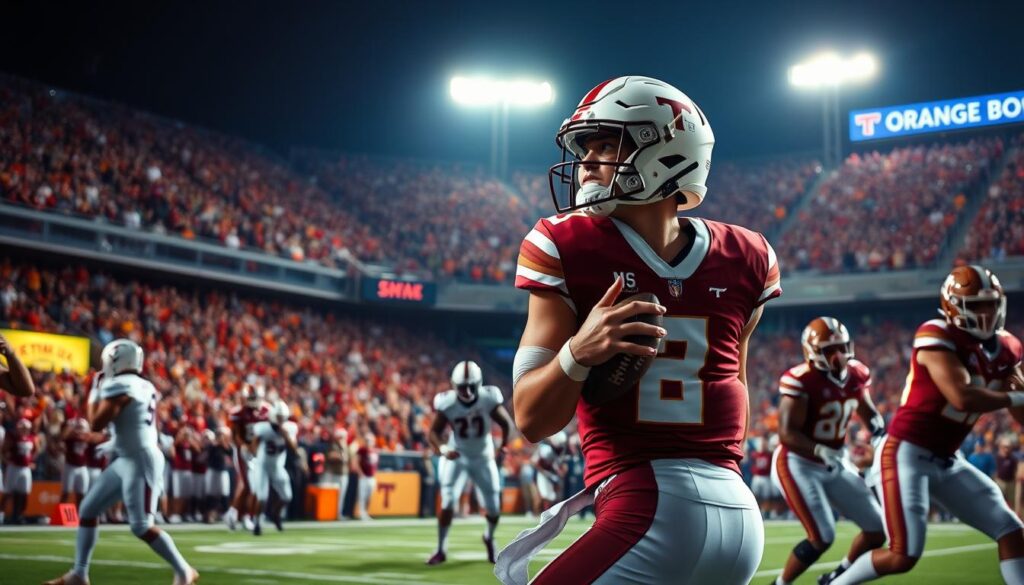
Then, Devon Achane made a legendary play. He ran 76 yards on third-and-8 with just 3:44 left. This touchdown was more than a score; it was a highlight of the season.
Kellen Mond‘s stats were impressive: 16-for-26 for 232 yards and a touchdown. But his true story is how he became a hero in just 15 minutes.
The Aggies scored 21 points in the fourth quarter. This wasn’t just a win; it was a statement of their strength. It showed they’re back in the national spotlight.
Advanced metrics: line yards, havoc rate, success rate
If you think football is just about touchdowns and cheerleaders, think again. Jimbo Fisher was playing a different game, one of advanced stats. These stats are where real championships are won.
Line yards measure how much push your offensive line gives. The Aggies averaged over 6.4 yards per carry against North Carolina. This is not just good; it’s scary for defensive coordinators.
Havoc rate shows how often the defense messes up the offense’s plans. Texas A&M’s defense was all over UNC like they owed them money. The game was more like a systematic dismantling than a football match.
Success rate is key. It shows how often a team gains the needed yards. The Aggies were like a Swiss watch, always staying ahead.
Here are some numbers from the Orange Bowl:
- 32:13 time of possession dominance
- 225 rushing yards that felt like 500
- Zero turnovers (because Jimbo Fisher teams don’t beat themselves)
- 5/13 third down conversions that kept drives alive
This wasn’t luck. It was by design. While others drew up trick plays, Jimbo Fisher built a machine that won the real battles. The Aggies didn’t just win; they dominated the stats that matter.
Player spotlights and NFL futures
If the 2020 season were a talent showcase, these players didn’t just audition – they demanded starring roles in the next NFL season. The Orange Bowl served as their final callback, and boy did they deliver performances that would make any casting director take notice.
Devon Achane’s Orange Bowl MVP performance was legendary. His 140 yards and 2 touchdowns in the fourth quarter alone felt less like football and more like a masterclass in closing arguments. When the lights burned brightest, this speedster turned into a human highlight reel that NFL scouts couldn’t ignore.
Then there was Isaiah Spiller, the methodical powerhouse who treated every carry like a calculated investment. His two touchdowns weren’t accidents – they were the result of patience meeting power at exactly the right moment. Isaiah Spiller didn’t just run through defenses; he dissected them with the precision of a surgeon and the force of a wrecking ball.
Kellen Mond provided the steady hand at quarterback, managing the game with the calm precision of a bomb disposal expert. His 232 passing yards and rushing touchdown demonstrated why NFL teams value quarterbacks who can win both with their arm and their legs.
Ainias Smith turned every reception into an adventure in yards after catch. His 125 receiving yards weren’t just statistics – they were declarations of intent from a player who understood that college football was merely the opening act for his professional career.
| Player | Orange Bowl Stats | NFL Draft Outcome | Current NFL Status |
|---|---|---|---|
| Devon Achane | 140 yards, 2 TDs | 2023 3rd Round | Miami Dolphins RB |
| Isaiah Spiller | 2 TDs | 2022 4th Round | Los Angeles Chargers RB |
| Kellen Mond | 232 pass yards, 1 rush TD | 2021 3rd Round | Free Agent |
| Ainias Smith | 125 receiving yards | 2024 Draft Prospect | College Senior |
The beauty of watching these players wasn’t just in their immediate production. It was recognizing that we were witnessing the beginning of professional journeys. Each carry, each reception, each perfectly thrown ball served as building blocks for NFL futures that would begin just months later.
Isaiah Spiller in particular demonstrated the kind of consistency that makes NFL general managers reach for their checkbooks. His ability to maintain production while sharing backfield duties showed the versatility that modern NFL offenses crave.
These weren’t just college athletes having good games. They were professionals-in-training using the national stage as their final exam before moving to the big leagues. The Orange Bowl became their graduation ceremony, and the NFL Draft would be their job placement program.
CFP debate: resume vs eye test
Welcome to college football’s annual debate. Logic takes a break, and arguments become art. The 2020 Texas A&M team faced a big question: trust the resume or the eye test?
The Aggies’ resume shone bright. They had an 8-1 record in a tough conference. Their only loss was to the national champions. They had many quality wins.
The eye test was messy. Did they look like they could beat Alabama? Honestly, no one did. Their early loss to Alabama left deep scars.
Notre Dame made the playoff over A&M, despite losing big to Alabama. The Irish had a better “best win” (Clemson), but A&M had a better “worst loss” (only to Bama).
So, who you lost to or how you finished? The committee chose the former. Aggie fans are writing angry letters about it. The team improved a lot, but not enough.
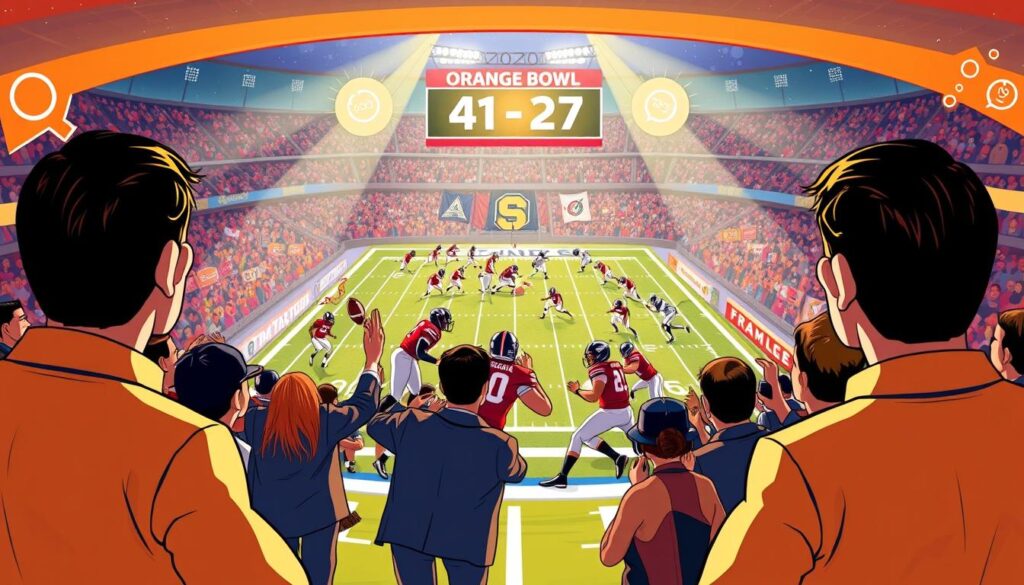
The Orange Bowl 41-27 win was Texas A&M’s last chance. They beat North Carolina in Miami. It was proof of what they could have been.
The Orange Bowl 41-27 game showed what the committee might have missed. They had a strong running game and defense. They were peaking at the right time. It was a perfect “I told you so” moment, but too late.
The resume versus eye test debate is unsolvable. The Aggies had the better resume. Notre Dame looked good until they didn’t. The committee chose tradition over change.
The Orange Bowl 41-27 win doesn’t erase the playoff snub. But it adds a great ending to the debate. Sometimes, the best teams don’t make the playoff. But the best stories do.
Program building blocks under Jimbo
Watching Jimbo Fisher build a football program is like seeing a master gardener grow a championship rose. It’s all about the thorns and beauty. His third season at Texas A&M was about more than just wins. It was about planting the program’s DNA.
The change started in the trenches. Fisher turned a finesse team into SEC road graders. Gone were the days when “Aggie football” meant outscoring opponents. Those times were as fleeting as a free buffet for offensive linemen.
- Physical identity – Making opponents hate playing your brand of football
- Cultural swagger – Expecting to win, not just hoping
- NFL development – Turning recruits into pros
The 2020 season showed Jimbo Fisher’s approach. He doesn’t build quick fixes. He lays foundations. That Orange Bowl win was the result of three years of hard work.
Here’s the proof in numbers:
| Building Block | Before Fisher | After Year 3 | Improvement |
|---|---|---|---|
| Rushing Yards/Game | 153.2 | 205.7 | +34% |
| NFL Draft Picks | 2.3/year | 5/year | +117% |
| 4th Quarter Points | 5.1 | 8.9 | +75% |
Jimbo Fisher achieved this while facing the SEC West and a pandemic. It’s like building a mansion with one hand tied. And he did it.
This wasn’t just about football plays. It was about building belief. Players stopped wondering if they could win. They started wondering by how much. This shift is what makes great programs.
Fisher’s plan at Texas A&M showed college football can build old-school power. Even in a world of spread offenses, the best ideas are often the oldest. Just ask anyone who faced the Aggies’ rushing attack.
Fan experience in a limited‑capacity year
Imagine going to the theater premiere of your dreams, only to find it’s a dress rehearsal with lights on. That was the 2021 Orange Bowl for many. The Hard Rock Stadium, once buzzing with fans, became a place of social distancing.
With only 13,737 fans, the stadium felt intimate but empty. Cheers echoed across the seats, and players could hear every voice. It was a strange change from the usual loud atmosphere.
The stadium felt empty. Big plays lacked the usual excitement without a cheering crowd. It was like finding a rare gem in an empty space.
Those who got tickets felt like they were part of a special club. But it was also like being in a science experiment. The seats were set up like a chessboard, with everyone six feet apart.
| Aspect | Normal Bowl Game | 2021 Orange Bowl | Difference Impact |
|---|---|---|---|
| Attendance | 65,000+ | 13,737 | -78% capacity |
| Decibel Level | 90-110 dB | 60-75 dB | Library vs concert |
| Social Interaction | High-fives, hugs | Nods, air-fives | Physical connection lost |
| Stadium Energy | Electric, contagious | Subdued, scattered | Momentum generator absent |
This limited capacity showed us how much we miss the crowd. The thousands of empty seats were more than just seats. They were the heart of the game.
The 2021 Orange Bowl was a lesson in how much we take for granted. We got to see football, but it was different. We hope it stays that way.
Legacy: setting the stage for recruiting and facilities
That Orange Bowl victory wasn’t just a trophy. It was a powerful recruiting tool. Jimbo Fisher could show that his system works on the biggest stage. Suddenly, top recruits saw Texas A&M as a real contender.
The SEC schedule, once seen as tough, became our pride. Beating the odds week after week proved we’re tough. Donors were more willing to invest, seeing their money pay off on TV.
Upgrading facilities became a must, not just a dream. The idea shifted from “maybe someday” to “why not now?”
This season laid the groundwork for the future. It changed how Aggies see themselves. They now expect to compete with Alabama and Clemson, not just hope to.