Revisiting Johnny Manziel feels like watching a game you promised never to watch again. The highs were electric and the lows were loud. The whole ride—on the field and under the microscope—turned into a kind of brand.
His legacy still sticks, even if you think you are “over it.” He was not just a highlight reel. He won the 2012 Heisman Trophy and made Texas A&M a force entering the SEC. Timing matters. Mythology loves a well-timed entrance.
Netflix knows a good rerun too. “Untold: Johnny Football,” directed by Chapman Way and Maclain Way, premiered August 8 on Netflix. It shows a mix of pressure-avoidance artistry on Saturdays and a life that rarely got to breathe. “Untold” is Netflix’s top-rated sports documentary series. Manziel is shown as one of the decade’s most notorious personalities. Fair—or just accurate?
This story starts earlier, before the noise peaked. How did a three-star recruit become the Johnny Manziel Heisman moment people still debate? What did a redshirt year really build, and what did it hide?
Next, I will follow the main story: how scheme changed chaos into production and how Kliff Kingsbury’s influence shaped the math behind the magic. I will explain why the 2012 A&M season still feels like a glitch in the usual order. Then comes the harder part—why the pro chapter failed, and what that means for the Johnny Manziel legacy today.
Context: SEC debut season and national spotlight
The SEC arrival was expected to be a slow adjustment. New stadiums and louder boos came with improved defensive backs.
The usual “welcome to the big leagues” handshake arrived—but this time, it felt like a hit stick.
Then the 2012 A&M season happened. Texas A&M wasn’t just touring the conference anymore. They crashed the party with their own DJ, daring others to complain.
That collision of new league, new scrutiny, and a quarterback playing like a glitch turned Saturdays into national events.
Big throws and broken angles created chaos. Defenders missed, making you check if your TV was on fast-forward.
The results felt earned, not hyped. The Aggies went 11–2 and won the Cotton Bowl over Oklahoma.
They gave the sport a fresh plotline without needing backstory. The spotlight was bigger than football—it was about branding and pressure.
Each week asked if a freshman could keep freelancing against grown-man defenses.
Rewatching clips shows how quickly the narrative became shorthand: A&M’s SEC arrival plus Manziel’s improvisation meant instant relevance.
For a clear snapshot of how the season was framed, Johnny Football captures that rush perfectly, without pretending it was calm.
The 2012 A&M season’s afterlife didn’t fade quietly either. Netflix’s “Untold: Johnny Football” leans into the circus aspect.
Opponents battled on the field, microphones off it. That’s what the SEC does when it finds a star: it makes him a headline every week.
| Pressure Point | What Changed in the SEC Arrival | How the 2012 A&M Season Looked Nationally | Why It Stuck to the Johnny Manziel Legacy |
|---|---|---|---|
| Stage | Every road trip felt like a prime-time test | Texas A&M became a must-watch program, fast | His biggest moments lived in the loudest places |
| Style | Speed and spacing met elite SEC athletes | Highlights became the language people used to explain A&M | Improvisation turned into identity, not just a trait |
| Scrutiny | More cameras, more commentary, fewer quiet weeks | Each game felt like a referendum on legitimacy | The celebrity layer became part of the story |
| Outcome | Winning mattered more than “adjusting” | 11–2 and a Cotton Bowl win over Oklahoma set the tone | It framed his season as program-changing, not just flashy |
Recruitment and redshirt year
Recruiting profiles love tidy labels, so they tried to file Johnny Manziel under “interesting but small.” He was a three-star in many consensus rankings, which is college football’s favorite way to be loudly wrong in public.
On film, the résumé didn’t whisper. At Tivy High School, he threw for 7,500 yards and 75 touchdowns across four seasons. That kind of output turns Friday nights into an assembly line of scholarship mail.
That offer list had real variety: Baylor, Colorado State, Iowa State, Louisiana Tech, Oregon, Rice, Stanford, Tulsa, and Wyoming. It was a spread offense of options before he took a college snap. It set the stage for Johnny Manziel legacy arguments that would feel oddly inevitable later.
The first national-stage “tell” appeared at the NUC All-World Game. He threw for over 200 yards and rushed for over 100, like someone hit fast-forward on the chaos. It was an early hint his game grew bigger when the lights got brighter.
The commitment story had a plot twist. He initially committed to Oregon, then flipped to Texas A&M. Then quarterbacks coach Tom Rossley was a major influence in the change of course.
If you want a preview of how the SEC arrival would magnify everything, start there. One choice and one staff pitch suddenly made the attention level spike from regional buzz to national static.
In College Station, timing opened a door. Ryan Tannehill left Texas A&M for the NFL. Manziel won the starting job through spring football and fall practices. He turned “maybe” into “how did anyone miss this?” in months.
That early year hinted at how he’d be used beyond a single label. Across his college career, he played receiver as well as quarterback. This fits the era’s positionless dreams and Kevin Sumlin wanting stress on every inch of the defense.
Here’s the recruiting reality in one glance, before the Johnny Manziel legacy got wrapped in myths and message-board poetry.
| Checkpoint | What happened | Why it mattered later |
|---|---|---|
| High school production | 7,500 passing yards and 75 passing TDs at Tivy High School | Created a statistical floor that didn’t match the three-star skepticism |
| National “tell” game | NUC All-World Game: 200+ passing yards and 100+ rushing yards | Showed his style traveled; the SEC arrival wouldn’t shrink him |
| Offer landscape | Baylor, Colorado State, Iowa State, Louisiana Tech, Oregon, Rice, Stanford, Tulsa, Wyoming | Proved demand was broad, even if rankings stayed conservative |
| Commitment twist | Committed to Oregon, then flipped to Texas A&M with help from Tom Rossley | Set the coaching and scheme fit that Kevin Sumlin could later amplify |
| Roster opening | Ryan Tannehill departed for the NFL; Manziel won the job in spring and fall | Turned opportunity into a runway, fueling the Johnny Manziel legacy debate |
2012 Heisman run: timeline, advanced metrics, and Alabama game deep dive
The 2012 A&M season moved fast, like a playlist on shuffle when you swear you hit “repeat.” One minute Texas A&M is the new kid in the SEC. The next, it’s living on prime-time oxygen.
At the center was the Johnny Manziel Heisman storm—part quarterback clinic, part streetball improvisation.
On paper, the résumé is clean. In 2012, Manziel threw for 3,706 yards and 26 touchdowns. He pushed the Aggies to an 11–2 record and finished with a Cotton Bowl win over Oklahoma.
He also took home the Davey O’Brien Award and the Heisman Trophy. He became the first freshman to win either award. History, delivered with a smirk.
The tape is messier, in the best way. Big throws show up on schedule, but the real hook is how often he’s making defenders miss in bunches.
That’s the “electrifying” argument people still make at bars: not just results, but chaos with a scoreboard attached.
And yes, scheme matters. The Air Raid label floats around because the spacing, quick decisions, and pass-heavy posture fit the vibe, even when the play breaks into backyard rules.
The fun part is how the structure and the scramble work together—like jazz that still starts on a chord chart.
This is where the deep dive starts: pressure. The pressure theme, highlighted in “Untold: Johnny Football,” isn’t just drama; it’s a measurable habit—avoid the rush, extend the rep, punish coverage late.
For the Alabama game lens, I’m tracking escapes, third-down scrambles, and how often broken plays turn into chain-movers. That’s where the Johnny Manziel Heisman case stops being mythology and starts being math.
| Resume marker | What happened | Why it mattered |
|---|---|---|
| Team arc | 11–2 in the 2012 A&M season, capped by a Cotton Bowl win over Oklahoma | Wins made the highlight reel count; the season had a clear payoff |
| Passing production | 3,706 passing yards and 26 passing touchdowns | Explains the weekly floor: points, pace, and field position swings |
| Freshman-first hardware | Heisman Trophy and Davey O’Brien Award as a freshman | Turned “hot start” into a national benchmark, not a cute story |
| Pressure response | Escapes, extended downs, and late-window throws under heat | Connects the Air Raid spacing to off-script conversions that break defenses |
Timeline-wise, it’s simple: SEC debut season, numbers stack up, awards land, bowl win seals the arc.
The harder question is the one that keeps this era alive: how many of those biggest moments were drawn up? How many were just Manziel refusing to be tackled on time?
Offensive architecture: tempo, spacing, scramble drills
When people talk about Texas A&M’s heyday, they often describe it like magic. But the better story is architecture. It was tempo that kept defenses from swapping personnel, spacing that widened throwing lanes, and a quarterback who treated pressure like background noise.
Under Kevin Sumlin, the pace wasn’t just a vibe. It was a weapon. Snap the ball quickly, force simpler coverages, and make every defender declare a job.
If you’re late, you’re wrong. In the SEC, “wrong” shows up on the scoreboard fast.
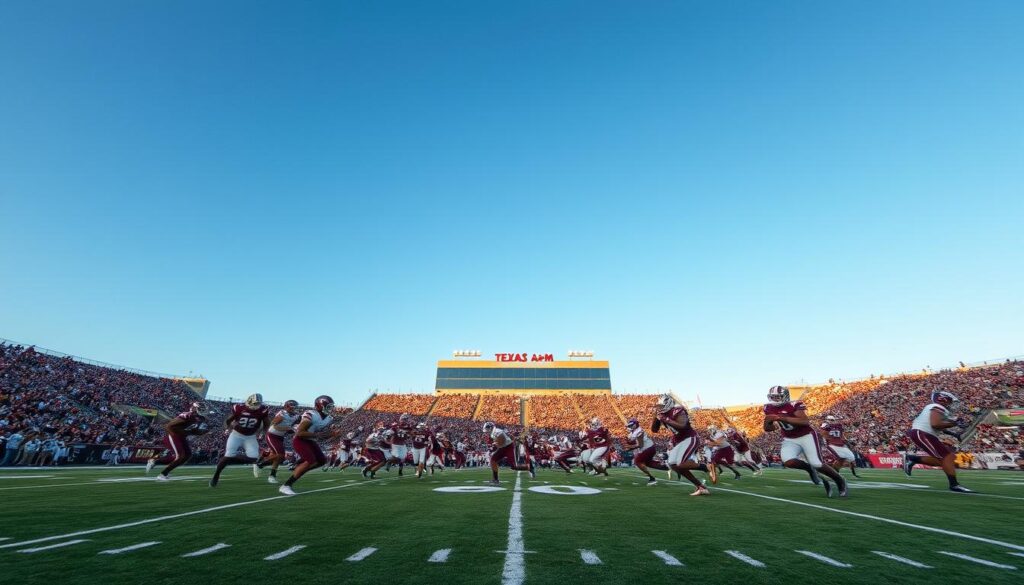
Johnny Manziel has said Kliff Kingsbury played a role in his success, and that checks out when you watch the structure. Kingsbury’s Air Raid DNA shows up in the clean reads and the roomy formations. The point wasn’t to run cute plays; it was to create easy answers before the snap.
Then came the other layer: the part you can’t diagram without lying a little. When pressure arrived, Manziel didn’t just “escape.” He turned the scramble drill into an extra progression. This pulled defenders out of rules they’d rehearsed all week.
That’s the scheme-meets-improvisation sweet spot. The Air Raid spacing gave receivers room to work back to the ball. Kliff Kingsbury’s quarterback-friendly concepts made the first option quick.
Kevin Sumlin’s tempo kept the defense tired and predictable. This made the broken plays feel oddly repeatable.
| Design element | What the structure created | What Manziel added under pressure | Why it stressed defenses |
|---|---|---|---|
| Tempo | Fewer substitutions and simpler calls, with fast snaps that forced communication errors | Quick decisions after the snap when the look changed late | Defenders had to align, cover, and tackle without time to reset |
| Spacing | Wider lanes for quick throws and clear sightlines for the quarterback | Late throws to uncovered grass when zones stretched too far | Every step out of position became a throwing window |
| Scramble drills | Receivers had rules to uncover when the play broke down | Extended time, with eyes downfield and sudden launch points | Coverage rules collapsed once the quarterback left the pocket |
| Quarterback-friendly reads | Defined first answers built on leverage and simple matchups | Second and third answers created on the move | Defenses had to win twice: at the snap and after the scramble |
If you want the clean label, call it spread football with Air Raid roots. But the honest label is a plan that expected chaos and stayed on schedule. That’s the rare overlap where Kliff Kingsbury’s structure and Kevin Sumlin’s pace lived with a quarterback who freelanced like it was his day job.
Cultural impact on Aggieland and national media
The SEC arrival didn’t just move Texas A&M onto a new schedule. It moved the program onto a louder stage. Aggieland had the tradition and volume but needed a national mic. Then Manziel showed up and supplied weekly plot twists.
The Johnny Football nickname became rocket fuel for the brand and a weight for the person. It sold the story in three words. This is catnip for TV producers and a nightmare for anyone wanting peace. Manziel called it both a blessing and a curse. You can hear both sides in how attention followed him everywhere.
That’s the cultural mechanism in plain terms: the SEC arrival gave A&M a bigger megaphone. Manziel gave it the content. The Johnny Manziel legacy wasn’t just about throws and scrambles. It was built on clips, captions, and nonstop feedback between fans, cameras, and the urge for instant opinions.
Money talk didn’t help privacy. The autograph saga and the “Money Manziel” label taught the country that fame always sends an invoice. The numbers and noise appear in this look at the autograph economy. It reads like an early draft of the NIL era.
Then there’s the modern artifact of that media climate: Netflix’s Untold: Johnny Football. It focuses on living life under a microscope off the field. That was the real innovation, not the spread offense—constant surveillance with a highlight soundtrack.
In today’s sports culture, mental health is not a footnote. Audiences expect it to be handled with adult judgment, not tabloid glee. Manziel’s Sports360AZ sit-down adds that layer to his legacy. The Johnny Football nickname was not just a slogan—it was a pressure system.
| Force | What it amplified | How it hit Aggieland | How it shaped national media |
|---|---|---|---|
| SEC arrival | Bigger opponents, bigger windows, louder stakes | Reframed Saturdays as national events, not regional rituals | Turned A&M into recurring prime-time programming |
| Johnny Football nickname | Instant identity, easy headlines, constant repetition | Merch, chants, and a shared shorthand for the moment | Reduced complexity to a brand while raising scrutiny |
| Highlight-loop culture | Viral clips and hot takes that outrun context | Made fandom feel like a live feed, not just a game | Rewarded spectacle and sped up the judgment cycle |
| Microscope coverage | Off-field monitoring as entertainment | Blurred the line between student life and celebrity life | Set the template later revisited by Netflix and podcasts |
- The SEC arrival expanded the audience, so every mistake and miracle had more witnesses.
- The Johnny Football nickname made the story portable but made the person harder to separate from the character.
- The Johnny Manziel legacy lives in that overlap: team revival, national fascination, and costs of being a spectacle.
2013 encore and records
By 2013, the magic trick wasn’t new anymore. Defenses had a full offseason to study the Johnny Manziel Heisman tape. They came to College Station with a plan, a spy, and very serious faces.
The SEC arrival honeymoon was over. Yes, everyone suddenly remembered how to tackle.
Still, the sophomore numbers got louder. Manziel threw for 4,114 yards and 37 touchdowns. Texas A&M finished 9–4 in its second year in the SEC.
If you like your football arguments neat and simple, this is where your hobby goes to die.
| Angle fans fight about | 2012 A&M season | 2013 encore |
|---|---|---|
| Team peak | 11–2 and the glow of a breakthrough | 9–4 with more bumps in the road |
| Storyline | SEC arrival meets shock-and-awe spotlight | Every opponent circles the date and brings receipts |
| Quarterback aura | Johnny Manziel Heisman chaos feels brand-new | Same chaos, but now it’s scouted and taxed |
| Debate fuel | Best season argument writes itself | Best player argument gets louder with bigger passing totals |
I hear the same three questions every time this year comes up. Was the 2012 A&M season the high-water mark because it felt historic? Or did 2013 show the better quarterback given the passing production jumped but the margin for error shrank?
- Best season tends to point at 11–2 and the total narrative takeover.
- Best player leans into the 4,114 yards, the 37 touchdowns, and the week-to-week grind.
- Best story keeps circling back to SEC arrival and how quickly the league adjusted.
Then came the fork in the road. After his sophomore season, Manziel chose to forgo remaining eligibility. He declared for the NFL Draft, making the debate a snapshot, not a series.
Pro journey and lessons learned
Draft season felt chaotic. One week, analysts said top-five. The next, some said he might go undrafted.
That showed we don’t know how to price this kind of volatility. The highlight reel was louder than scouting reports.
Then the math got real. The Cleveland Browns picked him 22nd overall in the first round. It seemed like buying a lottery ticket.
I understand the temptation—who doesn’t want electricity on demand?
The problem showed quickly. The improvisation that worked in college didn’t work in the NFL.
His electrifying skills failed to carry over. Timing, protections, and quick decisions don’t care about your brand.
Off-field issues didn’t help. After a few incidents, including a reported domestic violence case in 2015, the Browns released him after two seasons.
In the NFL, availability is a skill, and so is self-control.
| Stop on the timeline | What happened | What it suggests |
|---|---|---|
| Pre-draft volatility | Projections ranged from top-five to possibly undrafted | High evaluation risk when traits are rare and outcomes are wide |
| Draft night | Cleveland Browns selected him 22nd overall (Round 1) | Teams will still bet on upside when attention and need collide |
| NFL production | Eight game appearances; 2–6 as a starter; 1,675 passing yards; seven touchdowns; seven interceptions; 74.4 passer rating | Flashes exist, but consistency and decision-making set the ceiling |
| Post-NFL leagues | Stints in the Canadian Football League, Alliance of American Football, and Fan Controlled Football | Reputation travels, but so does the desire to keep playing |
| Recent update | Since 2021, he played with the FCF’s Zappers; for the 2022 season, he indicated he’d return as a player-coach | A pivot toward mentorship when the old path narrows |
The comeback did not follow one clear path. He played in the Canadian Football League, the Alliance of American Football, and Fan Controlled Football.
Since 2021, he played with the FCF’s Zappers. For 2022, he said he’d return as a player-coach.
That’s why Netflix Untold Johnny Football feels like a case study in scouting uncertainty, fame pressure, and adaptation.
Johnny Manziel’s legacy keeps getting talked about. It’s not just sports; it’s a modern story about attention and expectations.
It shows what happens when the league finally calls your bluff.
Behind-the-scenes practice stories and teammate anecdotes
Everyone remembers the Saturday noise. I’m more interested in the weekday math that made it work.
In that spring-to-fall stretch after Ryan Tannehill left, the job wasn’t handed over with a ribbon. It was won in reps, installs, and long meetings where eyelids fight the projector.
That’s where Kevin Sumlin’s first big test lived. He had a new staff, a new league, and a quarterback room trying to find a leader.
“Winning the job” meant showing up on time, commanding the huddle, and turning the playbook into something the offense could repeat at speed.
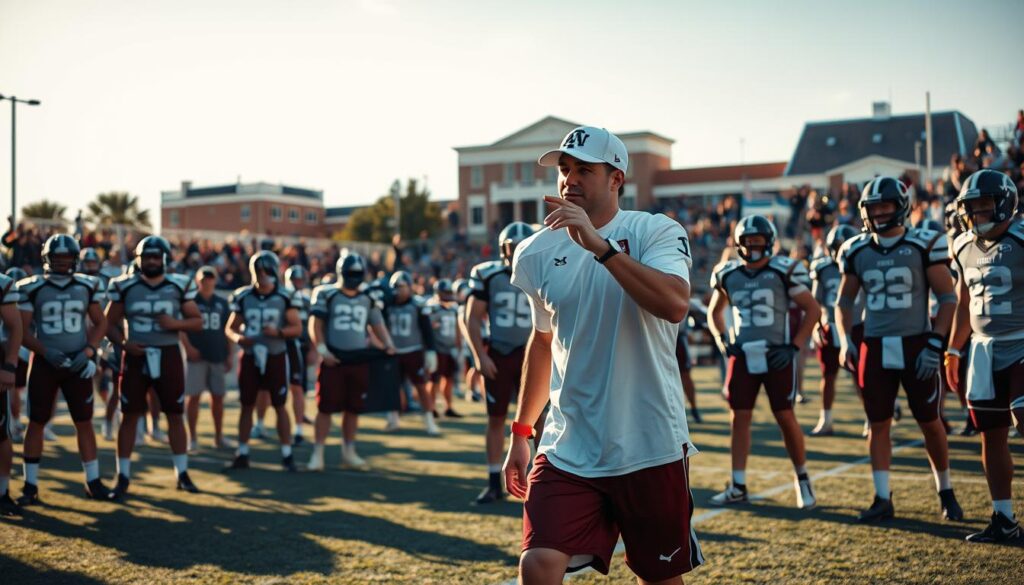
Then there’s the coordinator-quarterback bond, the part fans treat like a behind-the-scenes DVD extra. Johnny Manziel has credited Kliff Kingsbury for much that clicked.
It fits with how modern offenses live on rhythm. You install concepts, tag answers, and drill the “if-then” logic until it feels like muscle memory.
The funny part is how “improvisation” isn’t random when coached the right way. The pressure-avoidance theme seems like a magic trick but is more like a habit loop.
You read leverage, feel the rush lane, and buy a beat without panicking.
I can’t pretend the record gives us clean quotes or a specific Tuesday moment with cinematic dialogue.
What it does give is the outline of the week: competition through spring football and fall practices, plus Kliff Kingsbury’s influence on the quarterback’s process.
The long-form version can stack those basics against archived coverage and verified interviews, without turning memory into mythology.
| Weekday focus | What it tests in a starter race | Why it matters to Johnny Manziel legacy |
|---|---|---|
| Install periods and terminology | Mental processing under tempo; clean communication | Turns “chaos” into repeatable structure, not a one-off highlight reel |
| Film study and coverage ID | Recognition of fronts, blitz tells, and leverage | Supports the idea that the big plays had a map behind them |
| Scramble rules and spacing | Whether receivers and quarterback stay connected when the pocket breaks | Explains why broken plays still looked organized on Saturdays |
| Pressure response drills | Footwork, escape angles, and when to throw it away | Frames the “avoiding pressure” theme as trained decision-making |
| Staff trust and role clarity | Consistency across practices; leadership in the huddle | Shows how Kevin Sumlin could commit to the starter heading into the SEC spotlight |
If you’re hunting for one secret practice story that explains everything, you’ll be disappointed. The real story is less glamorous but more convincing.
A quarterback earned the job while a staff built rules for creativity. The system worked because the baseline was sharp.
This is the quieter engine behind the Johnny Manziel legacy.
Legacy debate: where Manziel ranks among Aggies
When I hear the Johnny Manziel legacy argument start, it sounds less like a bar chat and more like a courtroom drama. This drama has better tailgates. The “scoreboard” side is clear: Johnny Manziel Heisman, the Davey O’Brien, plus the shock of the 2012 A&M season.
You don’t have to like the hype to admit the math is loud.
On paper, the case is easy to outline. In real life, it gets spicy fast because people disagree on what to grade. Are they grading peak college value, total career, or a cautionary tale with shoulder pads?
| Debate lens | What fans cite | Why it keeps the argument alive |
|---|---|---|
| Campus-only greatness | First freshman to win the Heisman; 11–2 SEC debut with a Cotton Bowl win over Oklahoma; a sophomore line of 4,114 passing yards and 37 TDs | It rewards clear evidence, and the Johnny Manziel Heisman milestone is hard to top in any era |
| Career-long evaluation | Selected by the Cleveland Browns 22nd overall; went 2–6 as a starter; short tenure and later stops in alternative leagues | It forces the Johnny Manziel legacy talk to include Sundays, not just Saturdays |
| Fame-and-pressure reading | “Johnny Football” as both brand and burden; constant attention turning routine choices into headlines | Fame changes the noise level, so the 2012 A&M season gets retold like myth, not a box score |
Then there’s the popularity layer, which feels almost political if you squint. Texas A&M didn’t just win games; it won mindshare, and a Texas college sports poll showed how the state started changing in real time.
That context matters because legends aren’t built in silence.
Netflix’s Untold: Johnny Football, directed by Chapman Way and Maclain Way, pours gasoline on the discussion by examining his rise and choices closely. It doesn’t settle the Johnny Manziel legacy debate; it restarts it.
Once you return to the Johnny Manziel Heisman moment and the 2012 A&M season, the same question gets louder: what counts most, the peak, the whole arc, or the cost of being “must-watch”?
How to watch classic games + fan memories
If you want a clean on-ramp back into the chaos, Netflix Untold is the easiest button to press. Untold: Johnny Football debuts on Netflix on August 8 as part of Untold Vol. 3. It treats the era like a case study, not a scrapbook. I like that choice. Memory is messy, but a tight edit can get you back to the feeling fast.
The film also works as a watch-party anchor because it stitches the on-field escape artistry to the off-field microscope. You see how the SEC arrival didn’t just raise the difficulty; it raised the volume. Every scramble becomes a headline, every camera angle feels like surveillance. Is that fair? Sports rarely is.
Now, about “classic games.” Our dataset doesn’t list broadcast replays, official archives, or specific game links. So I can’t responsibly point you to exact streams here. In the full version of this guide, I’d steer you toward official team and conference archives and reputable streaming availability. Then help you build a weekend queue. Until then, Netflix Untold is the only sourced platform I can cite without guessing.
And yes, fan memories matter, because the Johnny Manziel legacy lives in the small details: the gasp when a pocket collapses, the laugh when a defender whiffs. The stunned silence after a dagger throw. People in Aggieland still talk about where they were, who they texted, and what they yelled at the TV. That’s the thing about a moment like this—stats fade, but the noise stays.