Let’s clear the air, shall we? That 13-inch bronze statue isn’t just an award. It’s a cultural artifact that bends reality, rewrites biographies, and can haunt a program’s soul.
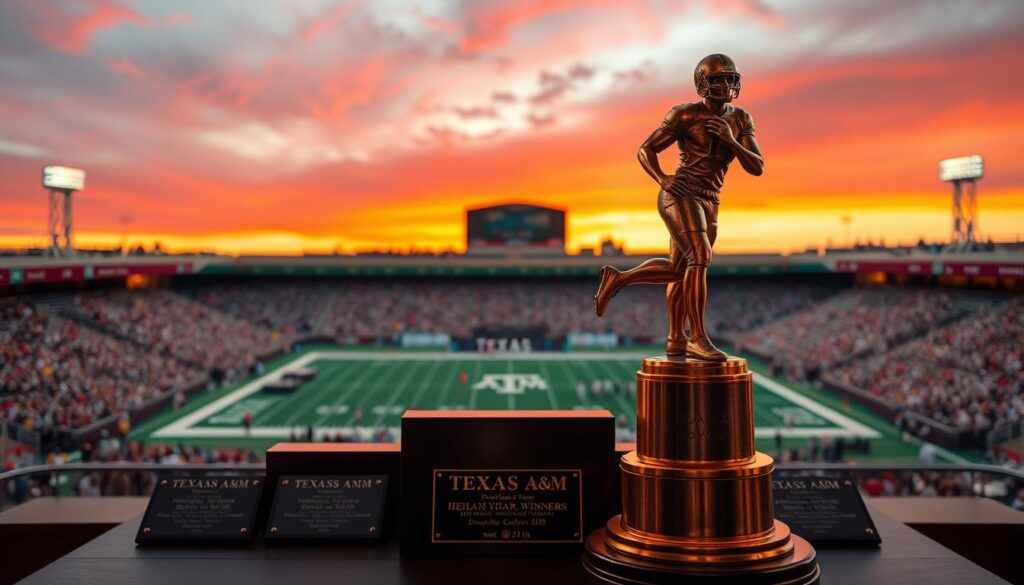
For the Aggies, the relationship with the Heisman is a classic Texas saga. It’s a mix of triumph and heartbreak. We all know the main character. Johnny Football wasn’t just a winner; he was a seismic event that cracked the foundation of college football.
But what about the players who came close but didn’t quite make it? The legends built not on bronze, but on the agonizing almost? Their stories are where the real intrigue lies. This isn’t a museum tour. It’s a guided autopsy of a legacy—both the one captured in metal and the many etched in what-could-have-been.
Johnny Manziel: The Rise, Fall, and Lessons Learned
Looking at Johnny Manziel’s Heisman season is like studying a supernova. It was brief, blinding, and hard to ignore. Before “viral” became a sports term, Johnny Football was the trendsetter.
His 2012 season was more than just a campaign. It was a takeover of college football. A redshirt freshman with a playground style beat Nick Saban in Tuscaloosa. That wasn’t just a win; it was a statement against traditional football. The Johnny Manziel Heisman win felt like a coronation of chaos.
But, did he truly deserve the award, or was he just the most compelling story? The numbers were incredible, and his flair was undeniable. Yet, his legacy is more about highlight reels and cultural impact than technical skill. The memorabilia market shows this well.
While many Heisman winners see their value plateau, Manziel’s remain high. They’re not valued for a Hall of Fame career but for that electrifying flash. It’s the value of a moment frozen in time.
The “fall” narrative oversimplifies his story. It wasn’t a sudden drop. It was a quick deflation in the NFL’s strict environment. His magic didn’t fit the NFL’s schemes. The transition from college star to professional player was stunningly fast.
| Metric | College Peak (2012) | Professional Reality (2014-2015) |
|---|---|---|
| Heisman Outcome | Winner; First freshman to win | Irrelevant; Drafted 22nd overall |
| Statistical Peak | 5,116 total yards, 47 TDs | 7 Pass TDs, 7 INTs, 258 rush yards |
| Cultural Impact | Defined an era; “Johnny Football” brand | Cautionary tale; Off-field headlines |
| Legacy Indicator | Memorabilia retains high value | NFL tenure: 2 seasons, 8 starts |
This contrast is the heart of the Johnny Manziel Heisman story. The trophy immortalizes a moment, not a destiny. It’s a peak so spectacular that the descent becomes part of the legend. For Manziel, the Heisman was the summit. The NFL was the journey back down.
His impact goes beyond stats. He changed how we see quarterback play in college, inspiring a new generation. He showed a player could be bigger than the system, for one amazing year. The 2012 Heisman winner remains a paradox: a figure whose professional failure deepens his college success.
So, what did we learn? The Heisman doesn’t predict greatness. It captures lightning in a bottle. Johnny Manziel’s bottle was the most dazzling, chaotic, and unforgettable. The rise was historic. The fall was human. The lesson is eternal: in sports, as in life, peaks are temporary, but legends are forever complicated.
Pre-Heisman Era: Aggies Who Should Have Won
People often see Texas A&M football as a giant waiting to wake up. But before the Heisman era, the Aggies were already making waves. They had players who were robbed of their rightful glory.
Imagine the Oscars for football. Sometimes, the best performance is overlooked for a more compelling story. For years, A&M had players who changed the game. Yet, they were often left out of the Heisman voting.
Who were these forgotten winners? Let’s look at the defensive star. He was so fast, it seemed like teleportation. A human wrecking ball, he was a top Heisman contender, but his position was overlooked.
Then, there was the running back from the old days. He ran for yards that would break records today. But his achievements were often overlooked, hidden in the sports section.
Was there a bias against aggie heisman candidates? Or is it just fans being bitter? The truth is a mix of both.
The Heisman is as much about the story as it is about the stats. It often goes to quarterbacks on undefeated teams or players with catchy nicknames. A&M’s best players were often on good teams, not legendary ones.
But the oversight seems systemic. When a defensive player finishes fifth, it’s seen as a moral victory. When a running back has a huge season, it’s ignored. It shows a blind spot towards the Aggies.
This created a legacy of “almost.” It wasn’t a lack of talent, but a surplus of almosts. The fans were waiting for a hero, not just because they believed in one, but because they knew greatness was there.
So, were there aggie heisman candidates who should have won? Yes. Their names might not be on the trophy, but their legacy lives on. They paved the way for the first Aggie Heisman winner in 2012.
The Manziel Phenomenon: Breaking Every Record
Johnny Manziel’s 2012 season was more than just good. It was a cultural explosion in a maroon helmet. He broke records, racking up 5,116 total yards and 47 touchdowns. These numbers weren’t just stats; they were a bold statement that changed quarterback play forever.
Watching Manziel play was like seeing a live art show. His game was a mix of genius and boldness. Defenses were left stunned, as Manziel turned possible sacks into amazing plays. He won every major award, including the johnny manziel heisman trophy.
The Manziel phenomenon went beyond the field. It was in his signature “money sign” taunt and his Sports Illustrated covers. The 2012 season was thrilling and talked about everywhere. It made every defensive coach in the SEC rethink their strategy.

Manziel’s freshman year was a statistical explosion. He became the first freshman Heisman winner. It was like a formal recognition of his leadership.
The Manziel Phenomenon was built on three key points:
- The Numbers: He shattered records, showing what a freshman could do.
- The Style: His play was creative and daring, making every game exciting.
- The Culture: He became a symbol off the field, adding to his legend.
Today, fans want memorabilia from Manziel’s Heisman year. They seek proof of his incredible talent. The 2012 season is a legendary chapter in college football awards Texas A&M history, forever marked by Manziel’s impact.
Behind the Scenes of the 2012 Heisman Campaign
Here’s how it worked:
- The Organic Engine: Every highlight was a campaign ad. The 500-yard game against Arkansas and the escape-act touchdown against Louisiana Tech were all viral moments.
- The Media Tsunami: Press requests tripled. National outlets flooded College Station. The story of a charismatic, undersized quarterback in the SEC sold itself.
- The “Non-Campaign” Campaign: A&M focused on managing the frenzy. They wanted to keep the hype from overwhelming Manziel before the vote.
Saban’s message to his team is key. He had to calm his athletes down. They were facing the Heisman Trophy incarnate. This shows the power of an organic campaign.
The 2012 Johnny Manziel Heisman push was a natural disaster. It wasn’t a planned political race. It was talent and timing coming together.
Life After the Trophy: Johnny’s Professional Journey
Johnny Manziel’s pro career is a stark contrast to Myles Garrett’s. Manziel was like a comet, bright but short-lived. Garrett, on the other hand, is like a steady star in the NFL.
The Cleveland Browns drafted both, but for different reasons. Manziel was seen as a game-changer, while Garrett was expected to be a steady force.
Manziel’s talent at Texas A&M was unique and hard to replicate. The NFL, needing a system quarterback, was not the right fit for him.
This mismatch was like a jazz star forced to play only sheet music. Manziel’s creativity clashed with the NFL’s structured playbooks. His story quickly turned from “savior” to “cautionary tale.”
The memorabilia market shows the difference. A signed Texas A&M jersey is highly valued. A Browns jersey is more of a curiosity, a symbol of what could have been.
Myles Garrett’s journey was different. He went from Aggie to Brown smoothly. His skills translated well, leading to Pro Bowls and awards.
Garrett’s career follows a predictable path. His awards and accolades come regularly. This is a stark contrast to Manziel’s unpredictable journey.
Manziel’s story teaches us about the challenges of adapting to the NFL. The league values consistent, replicable skills over unique talents. Garrett’s success shows how well he fit this mold.
Johnny Manziel’s legacy is complex. He shone brightly in college but struggled in the NFL. His story is a reminder that being unique doesn’t always translate to success in the league.
Near-Misses: Aggies Who Came Close to Glory
The Heisman Trophy has a special talent for creating legends. There are the winners and the near-misses. Aggie history is filled with these stories of great players who almost won.
Myles Garrett is a prime example. He was a defensive end who changed the game. Yet, he didn’t win the Heisman. Again. His awards, like the Bednarik and Hendricks, show his true dominance.
The Heisman vote is quirky. It favors quarterbacks and running backs. Players like offensive linemen have little chance of winning. It’s about who’s most narratively convenient, not the most valuable.

Other Aggies like Dat Nguyen and Luke Joeckel also came close. Nguyen was a fierce linebacker, and Joeckel was a top tackle. They were on the cusp of greatness but fell short.
Coming close to winning says more about the award than the player. It shows the award’s limits. The “what if?” is a badge of honor, proving their brilliance.
The legacy of these players isn’t lessened by being snubbed. It’s often enhanced. We remember their near-misses more than many wins. It sparks debate and cements their legend.
The Impact of Heisman Recognition on A&M
For Texas A&M, the Heisman Trophy was a game-changer. It made the program a top choice for recruits. Before 2012, the talk about college football awards texas am was just a dream. But after Johnny Manziel won, it became a reality.
The trophy showed the world what A&M could do. It changed the way recruits saw the school. Instead of dreaming, they knew they could be the next big thing.
But this new status brought high expectations. Every quarterback was seen as the next Johnny Manziel. This was both a blessing and a curse. It showed the program’s greatness but also raised the bar too high.
The school’s image changed overnight. Having a Heisman winner made A&M stand out. It became a benchmark for success.
Let’s look at the changes in numbers. The table below shows how the Heisman win changed the program.
| Category | Pre-2012 Heisman Era | Post-2012 Heisman Era |
|---|---|---|
| Recruiting Pitch | Built on tradition, conference prestige, and future promise. “Help us make history.” | Now focuses on proven success and a path to stardom. “Follow the path we’ve built.” |
| National Perception | A respected, often overlooked program in a powerhouse conference. | A top choice for elite talent and a constant source of headlines. |
| Program Expectations | Competitive seasons and bowl appearances were celebrated. | Now, just being competitive is seen as not good enough. The goal is championships. |
| Quarterback Spotlight | Quarterbacks were key players under a system-focused microscope. | Every quarterback is now measured against a Heisman legacy, facing huge pressure. |
| “College Football Awards Texas A&M” Conversation | A hopeful “if” scenario. Which Aggie might first break through? | A confident “who’s next?” discussion. It’s now an expectation, not a dream. |
The Heisman Trophy gave Texas A&M a lasting place in history. It changed the college football awards texas am conversation from dreams to expectations. But it also brought a lifetime of scrutiny and a high standard to meet. The trophy is not just a symbol of success but a heavy responsibility to carry.
Current Aggies with Heisman Trophy Possibilities
Assessing Heisman Trophy chances isn’t just dreaming. It’s about stats, stories, and being in the spotlight. Texas A&M has players who fit these criteria. The excitement in College Station is growing, looking to the future.
So, what makes a Heisman contender? First, they need impressive stats. Second, their team must be in big games in November. Third, they need a standout moment that defines their season.
- Statistical Dominance: Leading a top offense in a major conference.
- Team Success: Playing for championships, or at least spoiling them.
- The Narrative: A compelling story that captivates national media.
- The “Wow” Factor: Plays that break the internet and highlight reels.
The Quarterback Conundrum: A Wealth of Arms
The path to the Heisman is often through the quarterback position. Texas A&M’s quarterback room is filled with talent. This talent has everyone from scouts to oddsmakers taking notice. It’s not just one player; it’s a group of possibilities.
Looking at the 2025 Heisman Trophy odds, Aggies are everywhere. This shows the national spotlight is on them. It gives a chance for a star to emerge.
The Established Threat: The Veteran Playmaker
Every year, a player makes a leap from “very good” to “can’t ignore.” Is there a skill player ready for a big season? This player already has fans. His job is to put up huge numbers and be the main attraction.
The Dark Horse Defender
A defender winning the Heisman is rare. But what if an Aggie edge rusher gets 20 sacks? Or a safety returns four interceptions for touchdowns? The story would be clear: “The best player on the best defense in the SEC.” It’s a long shot, but possible in today’s sports world.
Discussing the Heisman Trophy at Texas A&M is real now. It’s about specific current Aggies with unique skills. The 2012 team’s success is a guide. The next chapter is being written on the practice fields.
How the Award Changed Aggie Football Forever
Winning a Heisman Trophy does more than just shine a trophy. It changes a team’s whole mindset. For Texas A&M, Johnny Manziel’s win in 2012 was a game-changer. It turned a dream into a reality.
The team’s goals suddenly seemed within reach. Talking about heisman trophy aggies is now about what’s possible. This change is seen in every recruiting visit and on magazine covers.
The team is always under scrutiny. Finding the next aggie heisman candidates is both talent search and storytelling. The difference? The story has a proven start. The path is clear.
The award’s real impact is raising the team’s goals. Ambition was set higher. Now, Texas A&M aims to repeat its success, knowing the way.