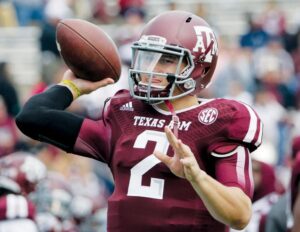
I’m writing this for two kinds of people: the Aggie faithful who can smell Kyle Field grass through a phone screen, and the culturally curious who like their American mythmaking with receipts.
John David Crow is the receipt. Born July 8, 1935, in Marion, Louisiana, he reads like folklore but shows up with dates, tape, and bruises that add up.
This John David Crow profile starts before the headlines, back in a small town with chores, practices, and discipline you don’t download.
His family had a military background, with a father who served in the Marine Corps. So, “mental toughness” was not a slogan. It was the house rule.
At Springhill High School, Crow played six positions, had undefeated seasons, and earned the nickname “The Springhill Steamroller.”
Coaches didn’t have dashboards or recruiting algorithms in the 1950s. They had dust, dirt roads, and word-of-mouth buzz about a local star who was flattening defenses.
That old-school recruiting world is why his move to College Station feels so direct it’s almost funny.
Texas A&M offered a scholarship, and he accepted right away.
You can trace the arc from Louisiana to Kyle Field in this Texas A&M Heisman story, but the engine is simpler: work, discipline, and raw talent that didn’t need a spreadsheet to look obvious.
Crow even put the mindset into plain language: “Discipline turns into victory.”
It’s not poetry, but it’s honest. It’s the start of how Aggie legends get made—one snapped chinstrap at a time.
Who this is for and why Crow still matters
If you like sports stories that also teach leadership, this is for you. I want the playbook, yes, but also the culture. It claps for “toughness” like it’s a national anthem.
Any John David Crow biography gets interesting fast because the facts don’t behave. He was a Louisiana kid who played football, basketball, and track at Springhill High School. Then he became a national college name. Later, he was an NFL captain and then an athletics director. He stayed close to football without pretending it wasn’t a business.
There’s a detail you can’t forget: at birth, a midwife struggled to remove the umbilical cord around his neck. The nerve damage paralyzed the left side of his face.
Yet his public identity became toughness, not tragedy. That shows us something about America. We love grit stories, especially when they are true and inconvenient.
Crow had a deadpan humor that cuts through hype. When people talk about Bear Bryant’s brutality, Crow said Bryant “wasn’t any tougher than my dad.” It’s funny but also a rule, not a slogan.
| What you’re looking for | What Crow’s story delivers | Why it still hits today |
|---|---|---|
| Leadership under pressure | Elite performance across roles, from college star to NFL captain | Modern work lives reward range, not just one perfect season |
| Culture and “toughness” decoded | Hardship that existed before the spotlight, with no PR polish | Grit gets marketed; his version was lived and measured |
| Tradition with receipts | A defining chapter for Aggie legends, anchored in real games and real stakes | College sports still runs on myth-making, even when the numbers talk back |
For Texas A&M fans, the short label is easy: Texas A&M Heisman. But the real question is why it lasts as eras change and attention shrinks.
Crow became a yardstick. Not just for winning, but for how standards get built quietly. They form slowly, with expectations that don’t ask permission.
Early life and recruitment to A&M
Every John David Crow biography starts in Marion, Louisiana, on July 8, 1935. The real story begins a few miles away in Springhill. His dad, David Harry Crow, worked at a paper mill, and his mom, Velma (Jenkins) Crow, kept the home steady.
It’s the kind of background that doesn’t scream “spotlight.” Usually, legends prefer it that way.
At Springhill High School, Crow turned “small town” into a launchpad. He was a three-sport standout in football, basketball, and track. He was like a one-man athletic department with great footwork. Recruiters call that “versatility” when trying to sound calm about it.
On Friday nights, the numbers got blunt. He helped Springhill win the 1952 state title. Then, in 1953, he rushed for 1,366 yards on 84 carries. That isn’t a stat line; it’s a warning label stitched onto shoulder pads.
By 1954, the Agricultural and Mechanical College of Texas—now Texas A&M University—wasn’t shopping for “potential.” It needed impact fast. Enter Bear Bryant, brand new in College Station and allergic to losing. He recruited Crow with assistant coach Elmer Smith like they were assembling a recovery plan for a proud program.
When Crow arrived at Texas A&M College (1955–1957), NCAA rules mattered. Freshmen weren’t eligible for varsity football. So no, he wasn’t a Junction Boy, though mythology tried to pull him in. The timeline is clear in John David Crow biography. The reality is just as interesting.
| Stop on the map | What shaped him | Why recruiters cared |
|---|---|---|
| Marion, Louisiana | Born in Union Parish; early roots in north Louisiana | Grounded start, no hype—just work ethic |
| Springhill, Louisiana | Raised near the Arkansas line; three-sport rhythm and small-town pressure | Multi-sport skill translated to balance, speed, and field vision |
| Springhill High School | 1952 state title; 1953 rushing burst: 1,366 yards on 84 carries | Production that made scouting reports read like alarm bells |
| Texas A&M College | Recruited in 1954 as the rebuild began under Bear Bryant and Elmer Smith | Fit the prototype for a culture shift toward a Texas A&M Heisman-caliber star |
What fascinates me is how “recruiting” sounds polite for what it really is: a talent search with consequences. Bear Bryant didn’t come to admire the scenery. He came to change the temperature. Crow looked like the kind of player who could make “Texas A&M Heisman” more than a dream.
The Junction Boys and Crow’s toughness
Every Texas football myth needs a desert, a villain, and a test of faith. In September 1954, Bear Bryant picked Junction, Texas. He built a 10-day camp that made quitting seem like the only sane option.
Two busloads arrived. Not everyone left on the same bus.
That hardened group became the Junction Boys. The label stuck because it’s tidy and dramatic—like a movie trailer in shoulder pads. But here’s the part people skip when rushing to sound informed at a tailgate: John David Crow wasn’t there.
As a freshman in 1954, he was ineligible. The famous heat and “run until you see tomorrow” routine happened without him.
So why does Crow still get filed into that story? Toughness isn’t a single camp; it’s a standard that spreads. Bear Bryant installed the culture, and Crow executed it later with a blunt and practical style—hard runs, sharp cuts, and a calm refusal to be impressed by contact.
When I hear people lump him in with the Junction Boys, I don’t just hear a mistake. I hear how Aggie legends get made: the program’s grit becomes one big shared memory even when the timelines don’t line up.
Crow’s edge came from living inside Bryant’s system after Junction, not from surviving Junction itself.
| What people say | What actually happened | Why the confusion persists |
|---|---|---|
| Crow was one of the Junction Boys | Crow did not attend the 1954 Junction camp due to freshman ineligibility | The nickname became shorthand for the whole Bear Bryant turnaround |
| Junction created the entire “tough A&M” identity | Junction set the tone, but the day-to-day program built the habit | One dramatic event is easier to retell than a season of discipline |
| Only camp survivors embodied Bryant’s ethos | Later stars carried the same standard through performance and leadership | Fans merge eras because Aggie legends tend to travel in packs |
In other words, the Junction Boys were the spark, and Bear Bryant was the engineer. Crow was the proof of concept—toughness translated into Saturdays, not just survival stories.
That nuance doesn’t shrink the legend; it sharpens it.
1957 Heisman season: game-by-game context, signature plays
Heismans don’t develop in isolation. They form in systems, schedules, and the era where a hard hit meant respect. To understand a Texas A&M Heisman story, start with the climb, not just the trophy.
Bear Bryant began in 1954 with a 1–9 record, his only losing season in 38 years. Then the Aggies improved. In 1955, the record rose to 7–2–1. By 1956, they went 9–0–1 and won the Southwest Conference title, their first since 1941.
This momentum matters for John David Crow’s profile. It set the stage for his success and drew attention to his talent.
In 1957, Texas A&M finished 8–3, and Crow became the unstoppable topic each week. He rushed for 562 yards and scored six touchdowns. He also grabbed five interceptions on defense.
Fans today praise “two-way” players; back then, it was just a regular part of the game.
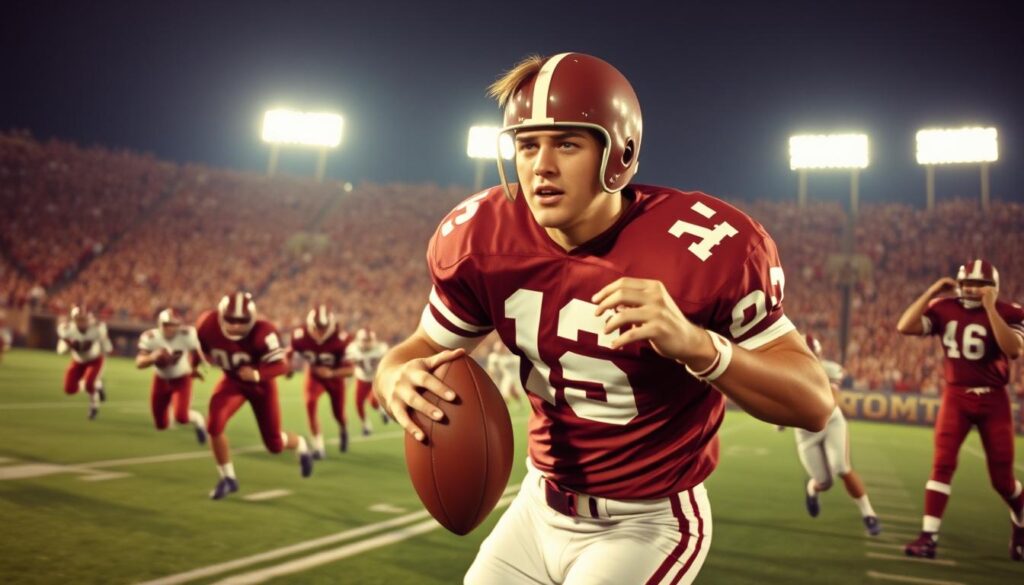
Each game felt like a chess match in pads. Opponents knew Crow might get the ball but had to respect the fullback dive, sweeps, and passes. When drives stalled, Crow wasn’t a decoy; he was the team’s reset button.
His signature plays weren’t long runs alone. He changed tight moments with clean cuts and stiff arms. On defense, he hunted the ball relentlessly. That’s how Aggie legends rise—not from one moment, but from consistent control.
| Season context | What it changed on Saturdays | Why it fed the 1957 spotlight |
|---|---|---|
| 1954: 1–9 under Bear Bryant | Urgency replaced comfort; every snap became a tryout | Set the “from the bottom” narrative voters remember |
| 1955: 7–2–1, first winning season since 1951 | Consistency showed up; the offense could sustain drives | Put Crow on a team people had to take seriously |
| 1956: 9–0–1, SWC title (first since 1941) | National attention arrived; opponents circled the matchup | Made the senior year feel like a sequel with stakes |
| 1957: 8–3 with Crow’s two-way production | Offense gained yards; defense stole possessions | Turned a great player into a Texas A&M Heisman winner |
One key detail is often missed in old stats. Crow wasn’t just scoring on offense while others worked on defense. His five interceptions prove he was everywhere on the field.
In any honest John David Crow profile, his two-way play is both the punchline and the proof of his greatness.
Also, he is the only player Bear Bryant ever coached to win the Heisman. This trivia fact matters. It shows how rare and dominant Crow’s season truly was—not just in one role, but across the whole team.
Leadership, two-way impact, and awards
Leadership is easy to praise but hard to prove. I look for things you can’t fake. For example, snaps on both sides of the ball, captain votes, and honors that show up in ink, not vibes.
That’s where the John David Crow biography stops being a highlight reel. It turns into a checklist of trust.
At Texas A&M, Crow ran like he was trying to move yard markers with his shoulder pads. In 1957, he rushed 562 yards and scored six touchdowns. Then he grabbed five interceptions on defense.
This two-way workload is why his name sits well among Aggie legends. He is more than just a star of a single season.
The Texas A&M Heisman glow matters. But what sticks with me is the daily grind beneath it: blocking, tackling, reading plays, and setting a standard others had to meet. When teammates follow you into contact, that shows credibility no trophy can give.
Off the field, he kept the same tempo. He graduated in 1958 with a business administration degree. It was like he planned for when the cheering stopped.
The John David Crow biography also includes academic recognition. Apparently, the man collected responsibilities the way others collect excuses.
| Area | What Crow did | Why it signals leadership |
|---|---|---|
| Two-way performance (1957) | 562 rushing yards, 6 TDs; 5 interceptions on defense | He carried risk and workload in real time, not just in speeches |
| Major football honor | Texas A&M Heisman winner (1957) | National validation that matched what teammates saw every week |
| Scholastic recognition | 1957 American Peoples Encyclopedia Scholastic All-America Team | Shows discipline beyond the playbook and beyond the spotlight |
| Campus honor | Listed in Who’s Who in American Colleges and Universities | Peer and institution-level recognition for influence and standing |
| Captaincies in the NFL | Team captain for the St. Louis Cardinals and the San Francisco 49ers | A repeat vote of confidence in new locker rooms with no hometown bias |
The pros sharpen the point. Being captain on the Cardinals and later the 49ers reads like a peer-reviewed study. Different teammates gave the same verdict—he was trusted.
For Aggie legends, this is the bridge from college fame to lasting respect. It keeps the Texas A&M Heisman story from shrinking into a single, lucky year.
Behind-the-scenes stories and teammate/coaches anecdotes
Some stories age well, like fine wine. Others age like film study: sharp, a little brutal, and hard to argue with. In a John David Crow profile, the best anecdotes also serve as scouting reports because football people can’t help themselves.
When Bear Bryant retired in 1982, he didn’t give polite compliments. He said, “John David Crow was the finest player I ever coached.” Watching film of him was like seeing a grown man play with boys.
That line hits like a referee’s whistle in a quiet room. It’s not poetry but a coach admitting the tape seemed unfair.
Crow’s reply is a kind of understatement that fits Texas folklore. Bryant, known for tough practices, “wasn’t any tougher than my dad.”
This shows his baseline for “hard” came from home. He grew up in a paper-mill-worker family where excuses were not accepted.
The timeline is important because context matters in these stories. Bear Bryant and Elmer Smith recruited Crow in 1954, right after a 1–9 season that left the program struggling.
The Junction Boys summer didn’t build Crow’s toughness; it revealed it through heat, repetition, and no sympathy.
Teammates often talk about how he practiced, finished runs, and tackled like defense was personal. Crow wasn’t loud; he was reliable, which is even scarier.
Reliability means showing up every snap, not just the highlight plays. That’s why the Junction Boys stories keep coming back.
They don’t celebrate suffering but explain the late-1950s turnaround simply. Hard standards became routine, routine shaped identity, and a two-way star emerged naturally.
| Anecdote anchor | What it reveals on the field | Why it still fits the program’s arc |
|---|---|---|
| Bear Bryant’s 1982 retirement quote about film looking “unfair” | Elite speed-to-contact, clean angles, and plays that seem clear only after he makes them | Turns a highlight into proof, showing the late-1950s jump wasn’t just luck |
| Crow saying Bryant “wasn’t any tougher than my dad” | High pain tolerance, steady effort, and calm during tough practices | Shows toughness as a result of upbringing, explaining consistency over seasons |
| Recruited by Bear Bryant and Elmer Smith in 1954 after a 1–9 collapse | Ready to play both offense and defense, making very few mental mistakes | Links the rebuild to smart recruiting, not just motivational slogans |
| Junction Boys conditioning as a weekly measuring stick | Late-game stamina, strong tackles, and runs through contact | Explains why opponents wore down and why A&M’s identity grew strong fast |
NFL career overview and post-football life
The pro chapter in the John David Crow biography opens with a flex: the Chicago Cardinals take him second overall in the 1958 NFL Draft.
Two years later the franchise moves to St. Louis. Today it’s the Arizona Cardinals—because in football, even the zip code likes a rebuild.
He plays 11 seasons, mostly at halfback, with the Cardinals (1958–64) and the San Francisco 49ers (1965–68).
He’s a captain on both teams, which means, “Listen when he talks.” That Texas A&M Heisman polish didn’t fade. It just got louder under Sunday lights.
| Stop | Years | Role | What it says about him |
|---|---|---|---|
| Chicago/St. Louis Cardinals | 1958–64 | Halfback; record-setting runner | Big plays, steady production, and an 83-yard touchdown run vs. Washington in 1958 that still stands as the team’s longest from scrimmage (as of 2024) |
| San Francisco 49ers | 1965–68 | Veteran back; team captain | Less flash, more control—like switching from lead guitar to conductor and still owning the room |
| Pro accolades | 1960s | Four-time Pro Bowl; All-Pro team of the 1960s | Not a one-season headline; a decade-long argument for consistency |
The numbers are clean and kind to stat-heads: 4,963 rushing yards, 38 touchdowns, 125 games.
The real tell is how often he got trusted with the “don’t mess this up” moments.
That’s why Aggie legends travel well—they aren’t just talented; they’re dependable in public.
After the pads came off, he stayed football-adjacent on purpose.
He coached under Bear Bryant at the University of Alabama, then moved to NFL staffs with the Cleveland Browns (1972–73) and San Diego Chargers (1974–75).
The John David Crow biography reads like a long study in credibility, not job-hopping.
He later became head coach and athletics director at Northeast Louisiana University, now the University of Louisiana Monroe.
He eventually drifted back into Texas A&M’s orbit, because the Texas A&M Heisman story doesn’t end when the applause stops—it just changes venues.
That’s the quiet trick of Aggie legends: they don’t retire so much as reassign.
Legacy in Aggieland: scholarships, honors, and traditions
A lot of Aggie legends live in highlight reels. John David Crow lives in the campus workflow. He didn’t just win games—he helped run the place.
If you’re building a Texas A&M Heisman myth, trophies are nice. But office keys and long meetings? That’s the legacy that sticks when the band packs up.
In 1983, Jackie Sherrill brought Crow back as associate athletics director. By late 1988, he was the athletics director, serving until 1993.
That stretch wasn’t ceremonial. He hired R. C. Slocum. This decision still shapes how Aggie football talks about defense, discipline, and identity.

From 1993 to 2001, he moved into athletics development. Crow said he felt “fortunate to have never really had to divorce myself from football.”
This quote sounds like a line you write down because it’s both sweet and a little too honest. It fits his profile well.
He kept showing up, doing the unglamorous work that keeps scholarships funded and facilities humming.
| Legacy lane | What happened | Why it still matters in Aggieland |
|---|---|---|
| Administration | Associate athletics director (1983); athletics director (1988–1993) | Put a former star inside the decision chain, not just on a poster |
| Program-shaping move | Hired head football coach R. C. Slocum | Helped define the modern Aggie football personality for decades |
| Development | Director of athletics development (1993–2001) | Strengthened the long game: giving, scholarships, and sustained support |
| Hall and statewide honors | Texas A&M Athletic Hall of Fame (1968); Texas Sports Hall of Fame (1982) | Institutional memory, locked in where new fans can’t miss it |
| National recognition | National Football Foundation Hall of Fame (1976); Doak Walker Legends Award (2004) | Puts the Texas A&M Heisman story in a wider football frame |
| Campus landmark | Statue dedicated Oct. 15, 2010 at the Bright Football Complex; moved near Kyle Field’s north end (2015) | Makes the legacy physical—part of how people navigate Saturdays |
The honors list is long, and it’s real: Louisiana Sports Hall of Fame (1976), National Football Foundation Hall of Fame (1976), and A&M Distinguished Alumnus (2004).
In 2012, he was recognized as an SEC Legend at the SEC Championship game.
For anyone reading a John David Crow profile today, that pattern matters. Great seasons fade; systems don’t.
Among Aggie legends, Crow’s name keeps turning up where the traditions are built, funded, and passed on.
How to watch classic Crow games and where to visit on campus
If you want to build a John David Crow profile the right way, start with the place. Colleges teach with monuments, like a syllabus carved in bronze. I treat campus like a living footnote: walk first, then watch.
Make your first stop the John David Crow statue. It was dedicated in front of the Bright Football Complex on October 15, 2010. It moved near the north end of Kyle Field in 2015.
Translation: the story moved closer to the action, because memory likes a better seat.
From there, circle Kyle Field and let the scale do its thing. You don’t need a lecture to feel why a Texas A&M Heisman season still hits different. Stand near the north end and you can almost hear the crowd noise that made those old highlights feel real.
Want the “where was this built” context? Walk back toward the Bright Football Complex where the statue first stood. It links training spaces, game-day spectacle, and the long echo of Aggie legends.
For watching, I use sources that act like librarians, not rumor machines. Texas A&M Stories has a June 18, 2015 news release with dates and locations. The National Football Foundation Hall of Fame entry adds what the official record wants you to remember.
The Battalion’s June 22, 2015 remembrance adds the campus voice. History without attitude is just a spreadsheet. Pro-Football-Reference offers numbers that don’t argue back, easy checks on his NFL record and draft details.
One practical warning: some “classic” web archives block access or won’t load if JavaScript is off. When that happens, I skip tech support. I go back to university pages and trusted databases to keep my session moving.
| Stop or Source | What you’ll get | Best way to use it | Good for |
|---|---|---|---|
| John David Crow statue (near the north end of Kyle Field; relocated in 2015) | A physical anchor for the story and the cleanest “start here” marker on the map | Read the plaque, take a lap around the north end, then rewatch a highlight with the setting in mind | John David Crow profile context and on-site perspective |
| Kyle Field | Scale, atmosphere, and the home-stage logic behind big moments | Stand near the north end and picture spacing, angles, and crowd pressure as you watch clips later | Understanding why a Texas A&M Heisman run became campus folklore |
| Bright Football Complex area (statue location at dedication on Oct. 15, 2010) | A training-and-prep backdrop that balances the “game film only” view | Use it as a second stop after Kyle Field to connect preparation to performance | How Aggie legends are shaped off the main stage |
| Texas A&M Stories (June 18, 2015 news release) | Institutional dates, locations, and official framing | Use it to confirm timeline details before you share or cite anything | Quick verification without the internet rabbit hole |
| National Football Foundation Hall of Fame profile | Career summary with a formal, national lens | Pair it with campus stops to balance pride with broader football history | Credible viewing guide notes for a Texas A&M Heisman-era figure |
| The Battalion (June 22, 2015 remembrance) | Campus memory, tone, and the human detail that stats can’t carry | Read it after the walk; it lands better once you’ve seen the places | The lived culture around Aggie legends |
| Pro-Football-Reference | NFL stats, draft info, and season-by-season reality checks | Use it to cross-check claims and keep the narrative honest | Hard numbers to round out a John David Crow profile |
What modern Aggies can learn from Crow
If you want the clean takeaway, “be tough” is the lazy version. The John David Crow biography reads like a user manual for building durability on purpose.
He dealt with facial paralysis tied to birth-related nerve damage, then became a multi-sport standout anyway. That’s not grit as a mood. That’s grit as a plan.
And yes, the Junction Boys shadow hangs over all of it, like a Texas sunset you can’t ignore. Crow wasn’t in the Junction camp, but the standard still shaped the air he breathed.
Under Bear Bryant, execution wasn’t optional, and neither was accountability. In 1957, Crow ran the ball and snagged five interceptions because he didn’t outsource responsibility to “the other unit.”
The next lesson is that leadership should travel well. The John David Crow biography doesn’t stop at highlights and hardware; it keeps going through a business administration degree in 1958 and a long run in coaching and administration.
He coached at Alabama, the Cleveland Browns, and the San Diego Chargers, then led Northeast Louisiana (now ULM) as head coach and athletic director. Back at Texas A&M, he helped steer the athletic department from 1983 to 2001.
This included AD years from 1988 to 1993 and the hiring of R. C. Slocum.
Then there’s the part nobody wants on a poster. He married Carolyn Ann Gilliam on July 2, 1954, and raised three children.
He later lived through the death of his son, John David Jr., in a car accident near Birmingham at age 39. The Junction Boys story tells you how hard a body can work; the John David Crow biography shows how hard a life can hit.
Modern Aggies can learn to build something sturdy enough to hold trophies and tragedy without losing the compass. If that sounds “too serious,” Bear Bryant and Crow would probably say that was the point.